Featured Interview: Matt Dixon
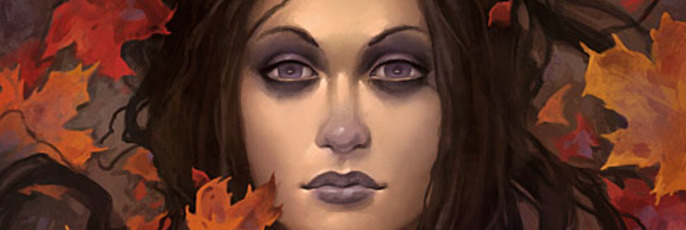
Here at Cubebrush we're all about helping artists improve their skills especially with the "Tutorial" section we dedicate to learning material. It's no wonder we get excited when we see veteran artists of the industry upload their content for the rest of the world to benefit from.
Matt Dixon has been producing some awesome work for a very long time now and we felt we just had to talk and find out more about him. He's been uploading some fantastic resources on his Cubebrush store so we're really happy to learn some more about him and share it with the world! You will find the full interview below as well as some of his brilliant work.

Q. How did you initially get your "break" as a professional artist?
How I answer that depends on how I define the moment that I became a 'professional' artist.
If I define it as the time I began to earn my living from art, that break was an unexpected phone call from a friend offering me a position at the game development studio he had started. We'd known each other since our early teens and had produced a game on the Commodore 64 together, but I hadn't spoken to him for years and wasn't pursuing a career in art at the time. That phone call made art my priority once more and set me on the path that has defined my working life so far. I often look back and wonder what I'd be doing now if I hadn't had that call.
If being a 'professional' artist means being known for your own work it would have to be another unexpected phone call, this time from a publisher offering me a book deal that would provide an income for several months. That call gave me the confidence to leap into the perilous waters of freelancing, where I've been happily splashing about for almost a decade now.

Q. If anyone wanted to follow in your footsteps - but get there faster than you did - what would they need to do?
That's really hard to say, especially for someone like me whose footsteps were placed so long ago! I'm not sure the path I stumbled along exists anymore; the internet and social media has changed the landscape for artists enormously over the past few years.
I've been very lucky and work has always found me. Both the 'breaks' I mentioned came out of the blue. I never thought that I could make a living from art, so I never seriously considered it as a career. If I'd had a different attitude, perhaps things might have happened more quickly, so that's what I'd recommend.
Be confident and have faith in your work. Everyone knows that you need to be very pro-active on social media to stay visible but don't just share things indiscriminately, target your best work to the folk that you'd like to work with and present yourself with confidence and professionalism.
I'd temper that advice by pointing out that getting there ( wherever 'there' is to you ) is the important thing, not how fast you make it, and that the journey defines the destination in many ways. Some artists are badasses right out of the womb, but it takes most of us a long time to get our chops together. I was in my thirties before I landed my first freelance gigs. There's no hurry. Take your time and enjoy the journey.
Q. If money was not a thing, what kind of project would you be working on right now?
I'd sink my time into personal work for sure. My robot artwork is the closest stuff to my heart and I could happily spend the rest of my painting days with those rusty little dudes.
It started out by accident, just one painting that grew into a little series, then a sequential piece and eventually a book. Last year, I ran a Kickstarter campaign to produce a second book of robots and I'm starting to feel as if they inhabit a whole world which I need to explore! It's definitely an ongoing project. Hopefully I can get another book of robot art together before too long.
Q. What's one subject you would never get bored of painting?
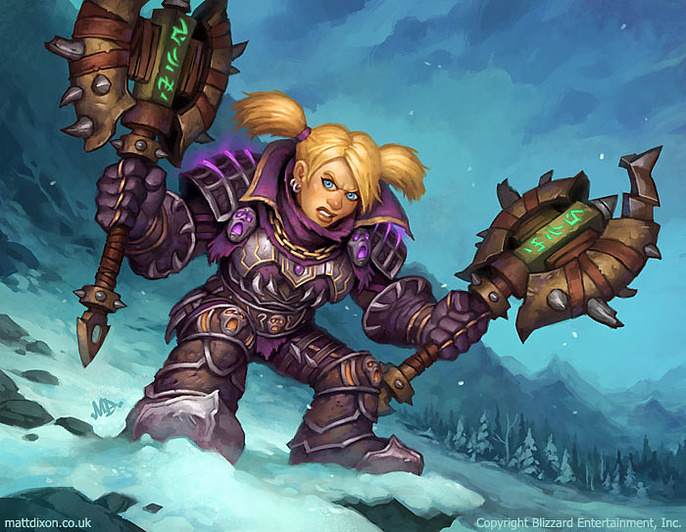
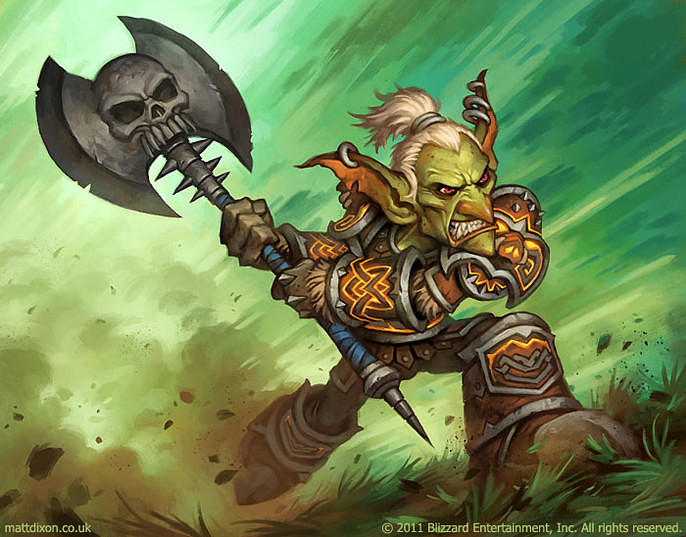
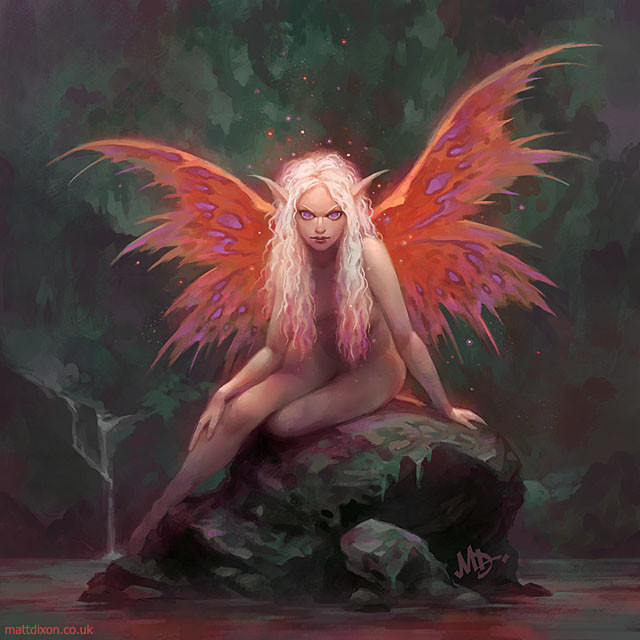
Fantasy! Nothing gives me more pleasure than drawing goblins, dwarves, swarthy heroes with massive swords and curvaceous heroines wearing tiny brass bikinis. That's the artwork that first captured my imagination and I never tire of it.
Traditional high fantasy has been getting a bad rap lately. Seems like there's a new blog post every day calling the preposterous female costumes into question, poking fun at the ridiculous size and impracticality of weapons, or highlighting the dubious biology of various fantastic beasts. That's all fair enough, but for me those are precisely the elements that make the genre such a joy. It's supposed to be cheesy, over the top and just a little bit silly. It's escapism. It's fun!
I'm at my happiest with the moon in the night sky, some werewolf skin underpants on my bottom, my enchanted pen of too many colours in my hand, and an angry troll glaring up at me from a hot Cintiq. Let me fill my headphones with Manowar or Amon Amarth and I'll paint, head bang and air drum my way into the dawn, smiling all the way to Valhalla.
Q. Tell us one fun fact about you - not art related!
I was an accountant for three hours.
It was my first job. I turned up in the morning for the induction with long greasy hair, cowboy boots and a leather jacket painted with band logos and took my seat in a room full of guys in suits. By lunch time I knew this was not going to be the career for me; I left to get a sandwich and never went back.
Q. Anything in particular you wish you knew when you started that you'd want to tell/warn beginner artists about?
I think I spent too much time worrying. As I got started, I worried that I wasn't good enough. After that, I worried that I was 'doing it wrong'. Then, as my career progressed, I began to worry that someone would realize that I don't really know what I'm doing half the time.
I wish I'd known all that worry was a complete waste of energy. It's natural to have those doubts of course, and I think artists are particularly prone to question their abilities. It's a good thing! It helps to drive us to improve. I think it's important to recognize those thoughts as part of the engine that drives our development. They should be a positive force, not a source of doubt or apprehension.
That's what I'd share with a beginning artist. We're all in this together. We all have those thoughts.
You know that amazing artist you admire? The one who blows your mind and you'll never be as good as? Quickdraw McGoldbrush or whatever their name is? They're on the same ladder as you. We all are. Quickdraw might be on a higher rung, but they were standing right where you are now once upon a time and they're probably not as far above you as you think. Know what else? Quickdraw has a favourite artist too, Keeneye Fancymarks, and Quickdraw is looking up at Keeneye having just the same thoughts as you.
So try not to worry. Worry doesn't make you a better artist. Practice, work hard and keep moving up that ladder. None of us reach the top, not even Keeneye Fancymarks, so let's just enjoy the climb!
Q. Finally, what can the art world expect from Matt Dixon in 2016?
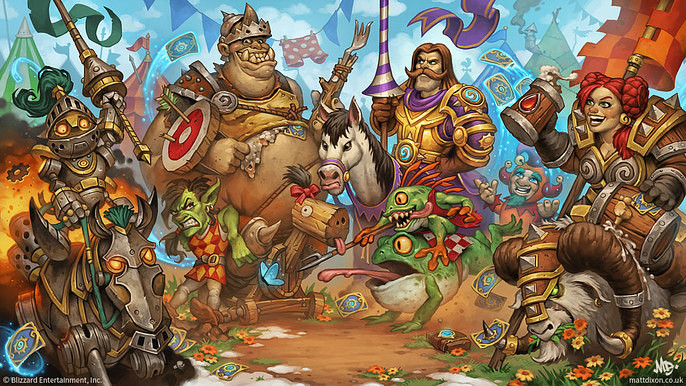
Aside from my usual illustration gigs, I'm looking forward to several publications of personal art this year. I'm finishing up the final few pieces for my third pin-up art book which should be published in the summer with SQP art books. I also have plans to publish a book of digital sketches and, hopefully, a new collection of robot art through Kickstarter.
My partner, Emily Hare, and I published a series of themed art books in 2015. We already have Monsters, Faeries and Undead, and we're looking forward to adding Dragons and Aliens to the collection this year!
Looking further ahead, I'll also be producing pin-up and robot calendars for 2017. This year's robot calendar sold out in a matter of weeks, and there are very few of the 2016 pin-up calendars remaining. I'm hoping for similar success with the next batch!
I'm also going to try and find more time to share process and tutorial videos and resources. This is something I really enjoy, and it's fascinating to analyse and deconstruct my own process. I've learned a lot from my own videos!