Build vs. Buy: When Purchasing Assets Actually Saves Time

TLDR: Not a AAA studio? Here's how to build smarter anyway:
- The red flags that make any asset — bought or built — a liability in your game
- The 80/20 rule applied to game dev — what deserves your full creative energy and what doesn't
- When buying and customizing beats building from scratch (and when it doesn't)
- Practical permission to build the game you can today, not the one you wish you could
AAA developers can build incredible gaming experiences from end to end with a dedicated designer team working full-time on the project.
That’s you, right?
Didn’t think so…
Most developers are mere mortals with limited time and resources to devote to their next game. That means using your energy for the elements that matter most—and making smart purchases that keep you on schedule and under budget.
How can you find the right balance between buying and building to get your game over the finish line? Here’s some practical guidance for picking the perfect strategy.
Which Game Assets Never Work?
Regardless of what you choose to buy or build, there are certain boxes any model will need to check to make it a valuable asset. And these qualities aren’t just about more and less useful—they’re big red flags for gaming applications!
- High-poly. Models with high polycounts can provide exquisite detail at any magnification. But they’re often far too complex for a game engine to render in real time without serious lag.
- Different texel density than your other assets. A piece with a wildly different texel density can easily look out of place or ruin your game’s overall aesthetic.
- One level of detail. True game-ready 3D assets should offer multiple levels of detail to mimic our natural vision and ease processing loads.

Fixing all of these issues in a model can take a lot of time if it’s even fixable at all. Create with these qualities in mind, carefully review an asset’s specs before you click “buy”, and consider a model’s downstream value for any future projects on your agenda.
Things That Go in the Build Bucket
The 80/20 rule states that about 80% of a player’s experience comes from 20% of the design. It’s the stuff that’s going to be on the screen all the time and affecting moment-to-moment gameplay. Everything else tends to drift into the background.
By understanding what affects that 20%, you’ll be in a position to decide what deserves your creative energy to build from scratch—and when it’s better to buy and customize.

Here are some of the areas where most game developers will want full creative control:
- Heroes. There’s no way you’d outsource your main character—they’re the star of the show!
- Bosses. These iconic villains can make or break a game. Generic just won’t get the job done.
- Important weapons and gear. Worlds are full of items, but a great weapon or upgrade can be as important as any character (Doom without the BFG? No way.)
- Look and feel essentials. Elements that set the tone or define your world may be worth getting exactly right.
- Skill development opportunities. If a project speaks directly to your professional skillset, it may be worth taking the time to figure it out today.
At the end of the day, the things that make the game your own are probably where your time should go. Think carefully about what really matters, and factor those elements into your overall project strategy.
Streamlining Your Pipeline with Solid Buys
Unless you’re willing to work on a pet project for as long as it takes, you’re probably going to need to invest in some valuable stock models to keep your pipeline moving.
Successful developers know where the bottlenecks might appear, what aspects are worth some extra attention, and how to use pre-made assets to balance the equation and buy time in case of scope creep or unforeseen issues.
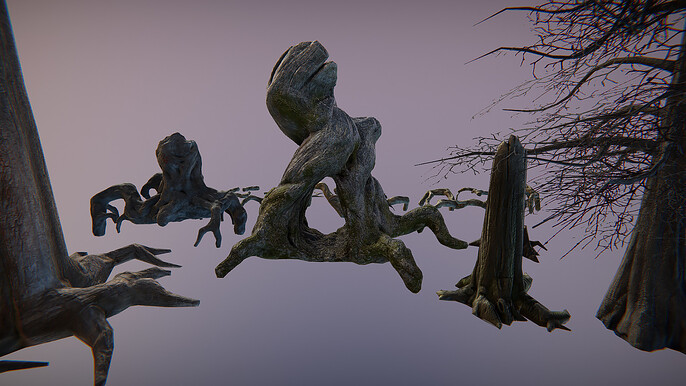
Here’s when buying assets is a solid play:
- Adding generic elements. If it’s clearly in the 80%, consider spending a little money to save a lot of time.
- Customizing will get the job done. Do you really need to burn hours rigging that cyberpunk donkey from scratch, or can you just paint a $2 model blue and add a mohawk?
- It’s cheaper in the big picture. If you don’t have the experience to get something exactly right today, DIY may end up costing you more time and money than biting the bullet on a purchase. Be realistic about where you are and make practical decisions that fit the project and will be useful down the road.
- Testing out mechanics. You probably don’t need your hero to work on gameplay mechanics. Plus, what you learn in testing may impact how you design those key builds. Grab a cheap game-ready model to kick around.
- Bigger fish to fry. Sometimes… it’s just not worth it. Give yourself permission to build the game you can today, not the one you wish you could.

Getting the Perfect Game-Ready Assets at Cubebrush
Even if you have the best strategy for buying and building, you’ll still need an amazing community of creators and entrepreneurs to find the assets you need.
That’s where Cubebrush can revolutionize your game design process. With 1.5 million members and 12,000+ storefronts full of resources and game-ready assets, you’ll have no trouble getting props for your latest digital project—whether it’s game-ready gear or high fives from your fans!
Start exploring Cubebrush today and get your next game on point and over the finish line in record time!
FAQs
What is the 80/20 rule in game design?
The 80/20 rule states that 80% of a gaming experience comes from 20% of its design. These elements are where game designers should put as much of their time and energy as possible and make smart purchases to offset those demands.
What is scope creep in game development?
Scope creep occurs when a game’s development slowly expands beyond the available time and resources originally budgeted for the project. It can lead to delays or even kill a project entirely.
Can buying game-ready assets save me money?
Yes. If it looks like building a model from scratch will take more time, expertise, or resources than you currently have available, buying and customizing a game-ready asset may be the most cost-effective solution.